Past Issues
β³οΈ
Past Issues
Past Issues β³οΈ Past Issues
Enjoy Learning with Us? Read Our Therapist Blog for More Research-backed articles written by real people!
You might also likeβ¦to follow us on social!
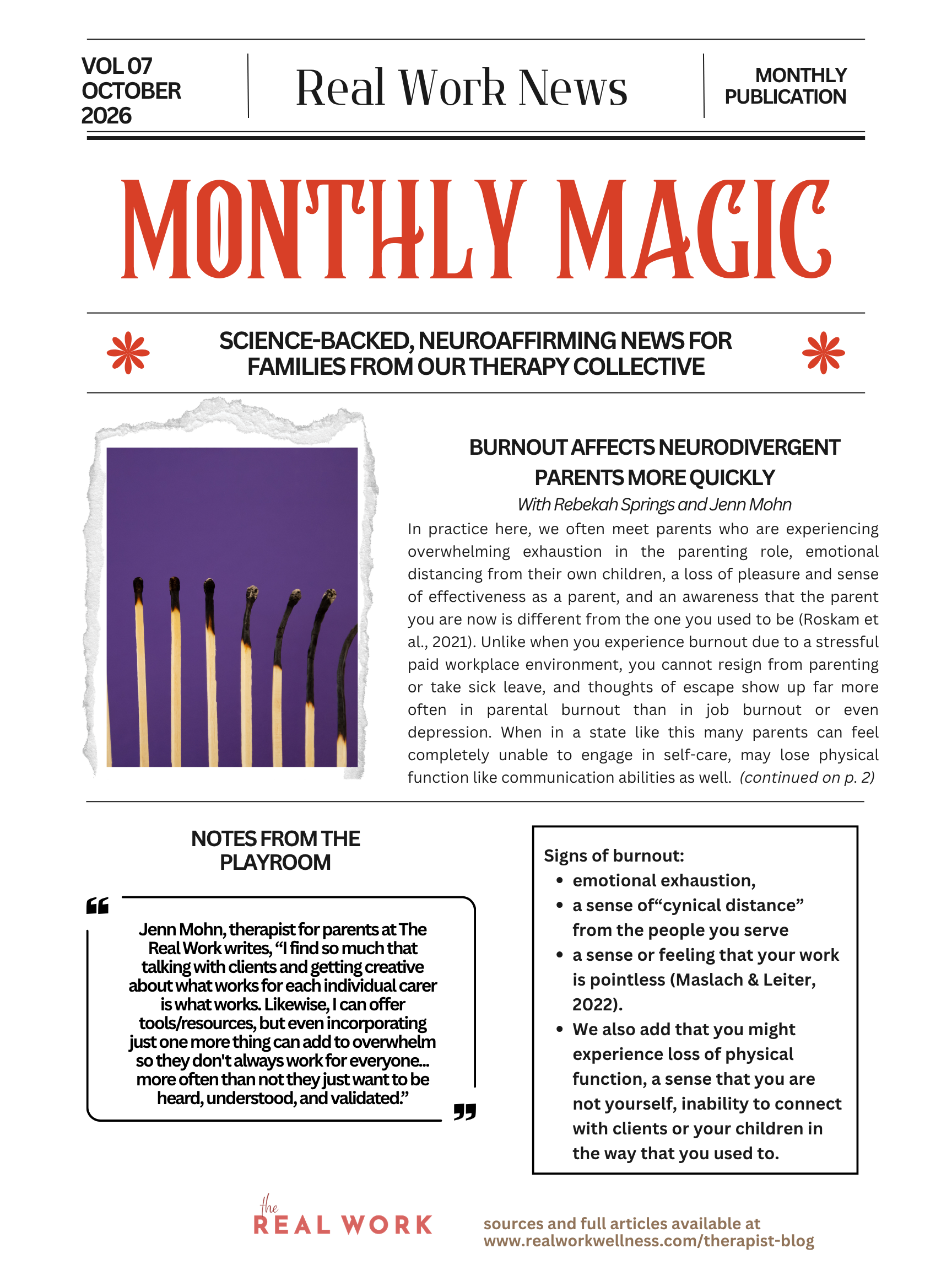
Caring for a neurodivergent child takes a lot, and sensitive and neurodivergent parents often feel it sooner and more intensely. Here's why burnout might hit differently for you, and what helps you refill and potentially prevent burnout from happening again.
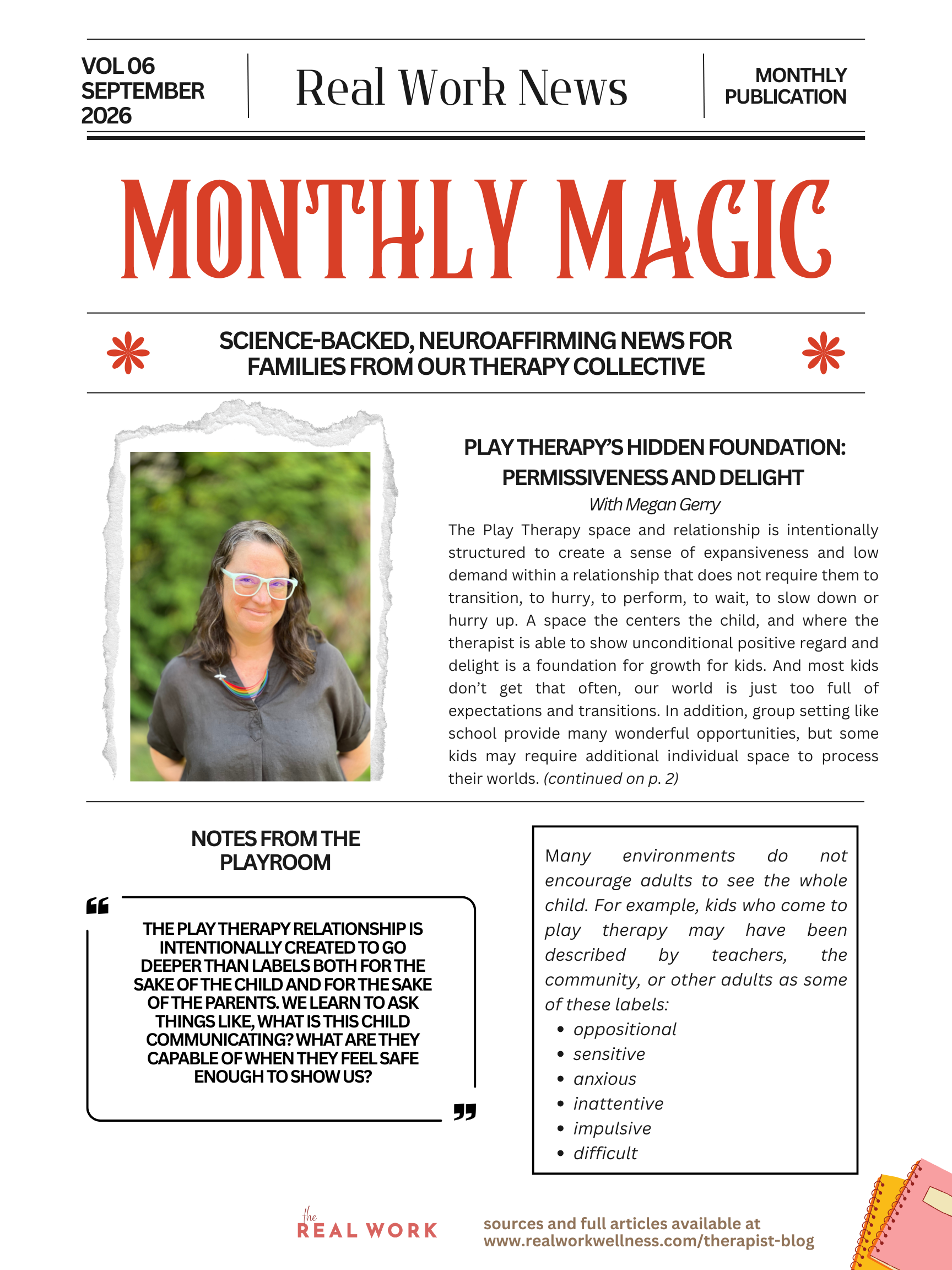
Most of a child's day is spent meeting someone else's expectations. Play therapy is built to be the opposite: one hour where your child leads and nothing is asked of them. A former Montessori teacher turned play therapist explains why that is essential for kids.
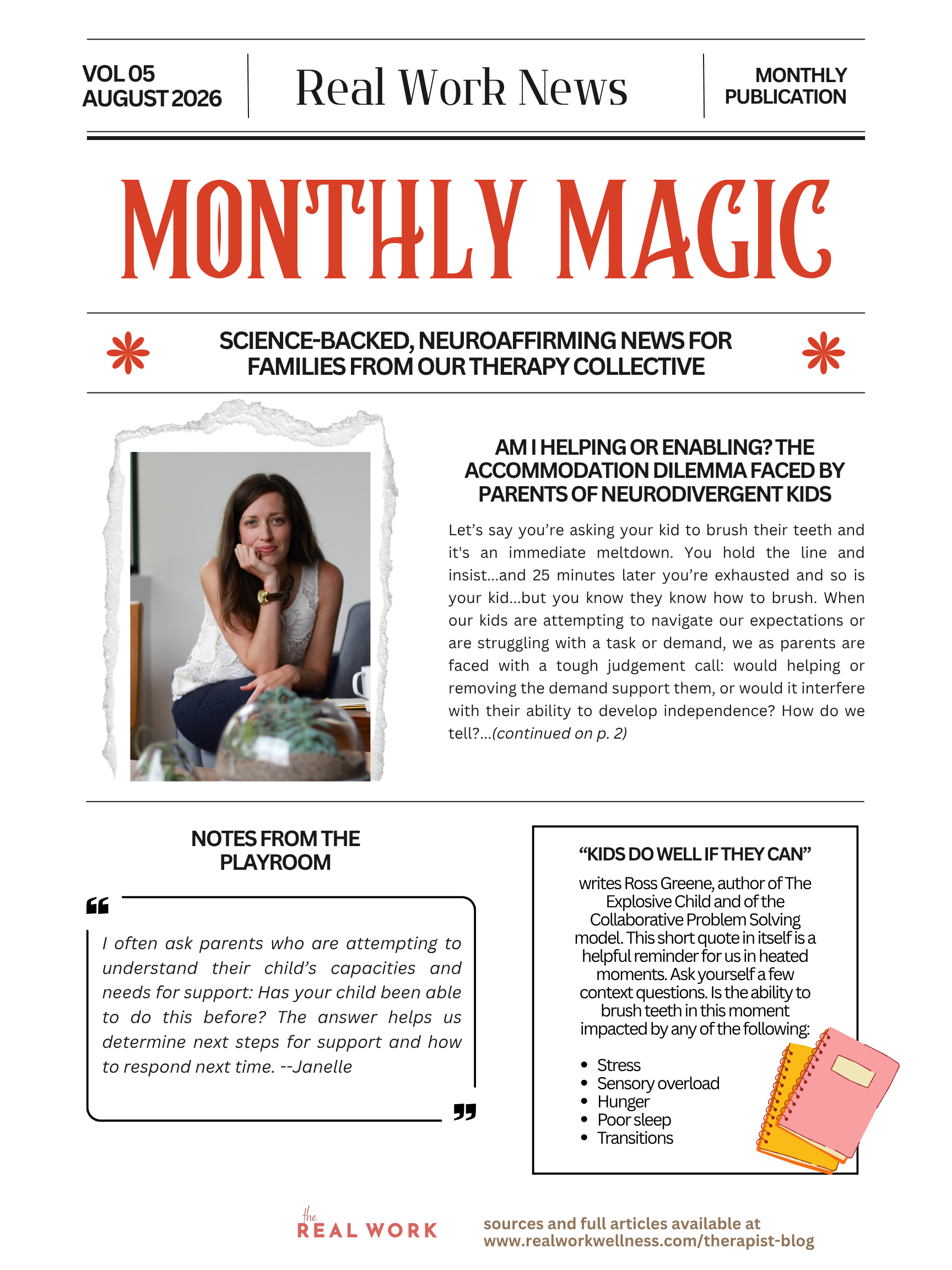
Letβs say youβre asking your kid to brush their teeth and it's an immediate meltdown. You hold the line and insist...and 25 minutes later youβre exhausted and so is your kid...but you know they know how to brush. When our kids are attempting to navigate our expectations or are struggling with a task or demand, we as parents are faced with a tough judgement call: would helping or removing the demand support them, or would it interfere with their ability to develop independence? How do we tell?
This month I spoke with Real Work Therapist Janelle Stuvland, LPC, who works primarily with neurodivergent kids and parents here, to help unpack this dilemma and to learn what helps parents navigate this.
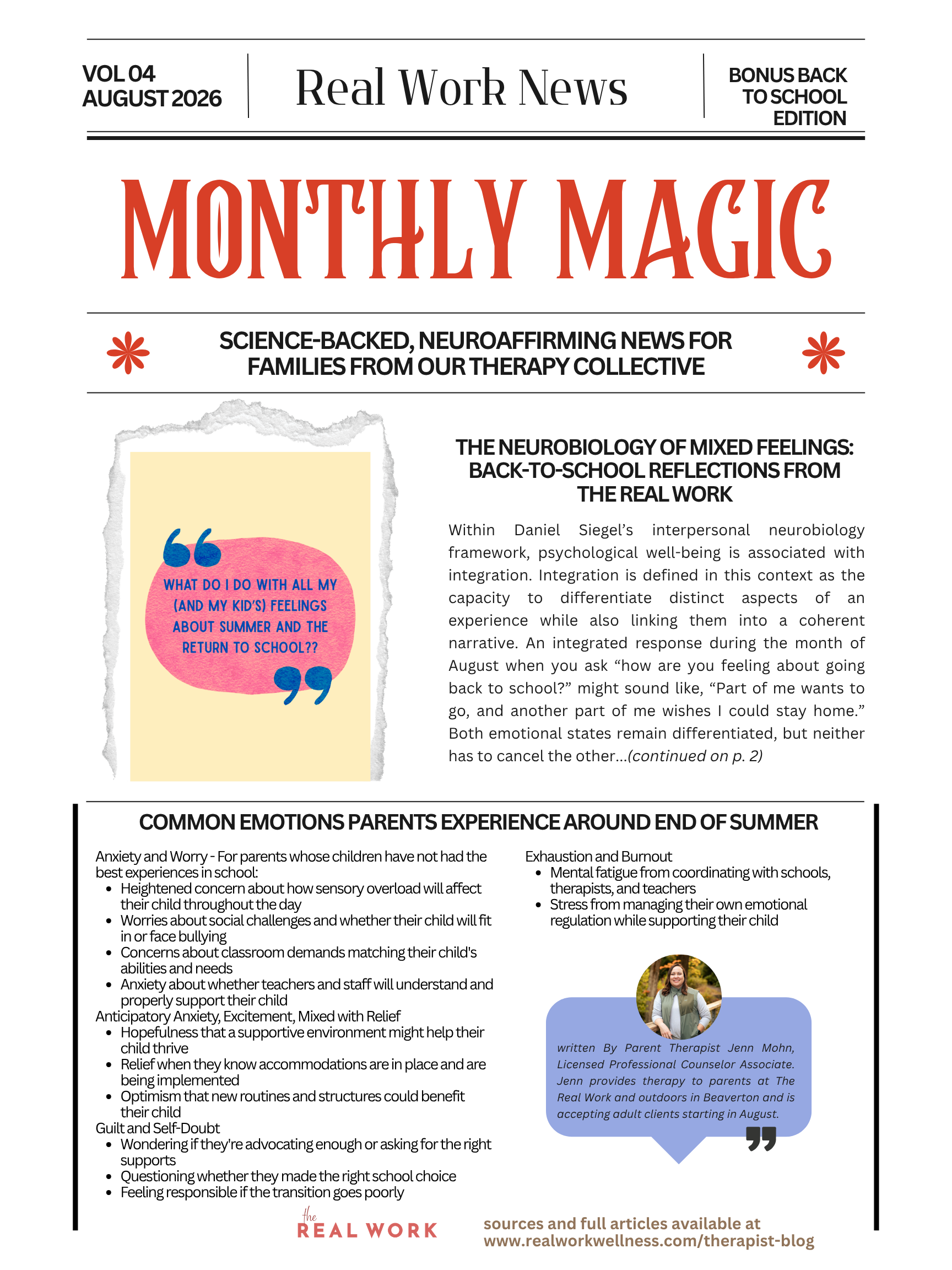
Excited and nervous. Ready and not ready. Back to school brings mixed feelings for kids and parents alike. Here's what's happening in the brain when two feelings show up at once, and how to make room for both.