Sensory Overload or Intentional Behavior? The 8 Sensory Systems
When there are multiple sensory systems that are over- or under-stimulated or not integration (not talking clearly to each other), this can be highly stressful for a child (or an adult, of course!). In this post, we summarize what it might look like if difficult behaviors are actually coming from sensory processing differences, and how to tell.
Here are some signs that your child may be experiencing consistent under- or over-activation of a sensory system:
• Perseverating- Repetition of Behaviors, repetition of a script
• Panic/Anxiety
• Rigidity
• Obsessing
• Over-reaction
• Compulsive Behaviors- Familiar Patterns = Safe
• Aggression
• Controlling Behaviors- Making sure all is as expected (re-organizing spaces/bedroom)
As play therapists, we make sure to consider individual sensory differences when working with kids, and we make sure to help parents do the same! Here is a quick reminder for things to consider in your environment if your child is showing the above behaviors consistently or after being in specific environments
• need for movement
• noise levels
• sensory stimulation
• Trauma history
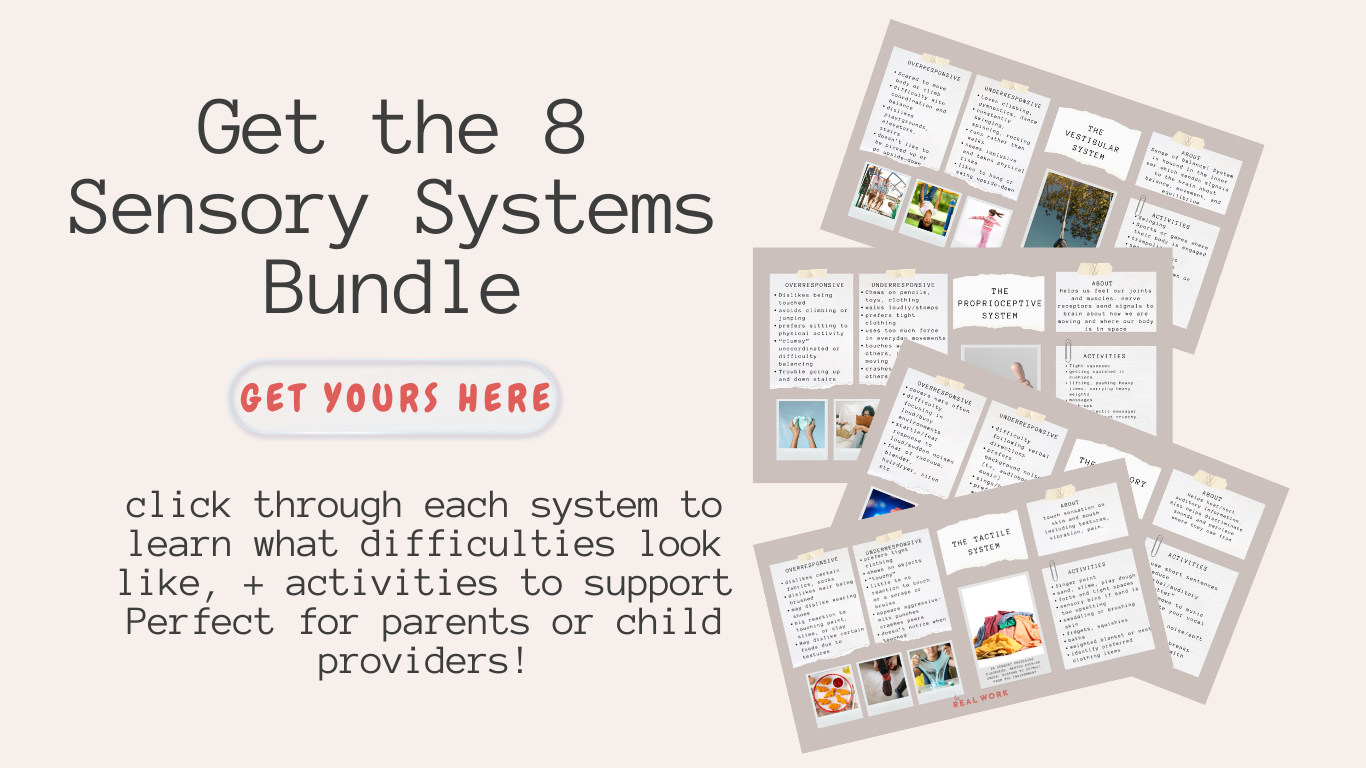
There are 8 sensory systems, and they all have specific jobs! Kids who have sensory differences often fall on one or the other end of a spectrum. They may be Sensory Craving/Seeking, or Sensory Avoiding. Take a look at the following signs, and if they are familiar, consider taking a look at our newest resource on the 8 sensory systems to learn more about what your child might be experiencing in one or more system, plus get some activities to do with them.
As always, consult an Occupational Therapist if you have concerns for your child, as this content is purely education and not therapy nor a diagnosis!
A child who is sensory craving/seeking:
seems to be constantly moving, jumping climbing, crashing
may speak loudly even when asked to lower voice
loves loud music, bright lights, stimulating environments
has a hard time giving personal space, might get too close to others or even hug or bump or crash when not appropriate
can be physically aggressive
might engage in risk-taking like jumping off things, running off
this profile might be mistaken for adhd or trauma reaction
A child who is Sensory Avoiding
May meltdown often and it may seem like they melt down for no reason
Has intense preferences around clothing, tags, seams in socks, textures of fabrics, wearing shoes.
Might be “picky eater” or avoid foods with specific textures or smells
might startle or be afraid of sudden noises like sirens, vaccuum cleaner, blow dryers
May be highly anxious