
Mick James, Professional Counselor Associate
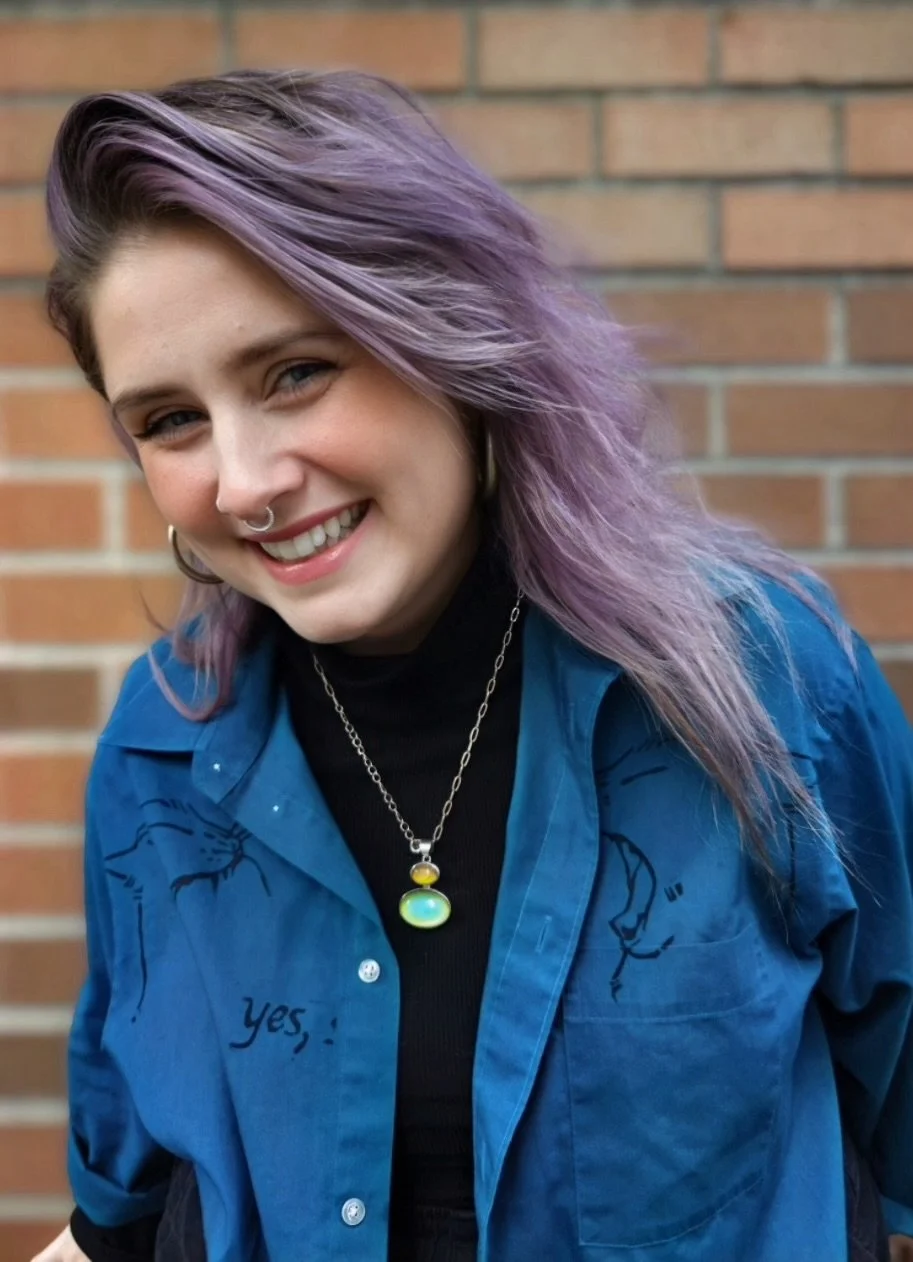
Supervised by Jordan Hubchick, MA, LPC, LCAT, ATR-BC
Mick James (they/she) is an unapologetically queer, neurospicy therapist who works with kids navigating fears and anxieties, and adolescents and adults navigating identity, emotional regulation, body image, and recovery. Mick shows up as their full self in every session, AUDHD, dyscalculia, fat and proud, and all, because that’s how a client learns it’s safe to show up as their full self too. My work is deeply relational and rooted in nervous system regulation.
Healing happens through connection, creativity, and being truly seen. Mick works through talk therapy, expressive arts, and drama-based approaches, meeting clients through movement, metaphor, role, and play, not just words.
Expressive, Embodied Therapy for Kids and Teens
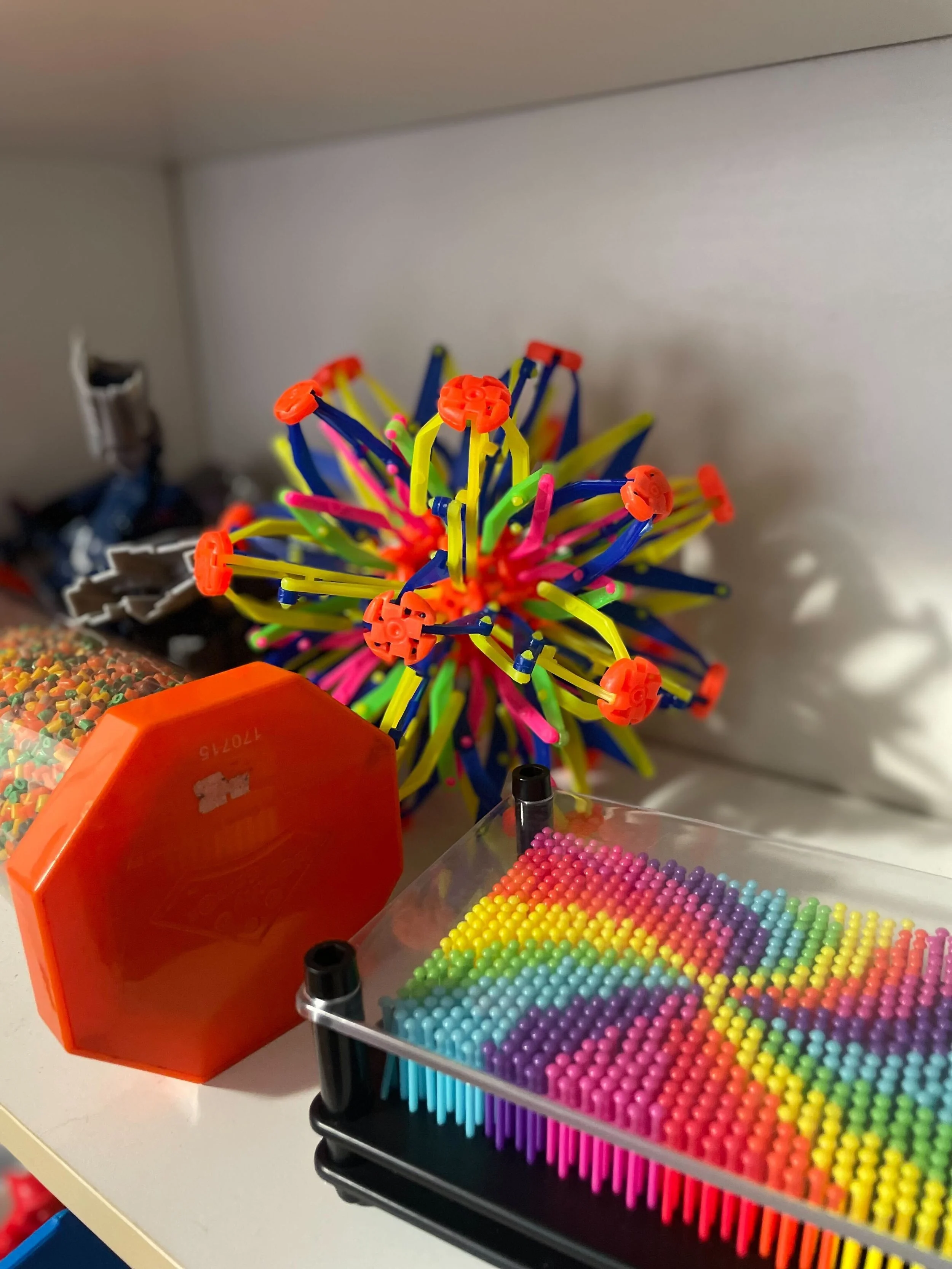
Therapy for Teens ages 13-18
I work with teens and adults who are exploring identity, including gender and sexuality, navigating eating disorders or body image distress, seeking LGBTQIA+ affirming and sex-positive care, processing trauma or chronic stress, or managing co-occurring concerns like OCD and anxiety. If you’re drawn to creative, experiential, non-traditional therapy, that’s exactly where I live.
Clients often tell me I’m easy to talk to, collaborative, and attuned. I’m especially thoughtful with clients who’ve felt misunderstood, pathologized, or pressured to fix themselves in past care. You don’t have to perform, explain yourself endlessly, or earn care here. You’re allowed to arrive exactly as you are.
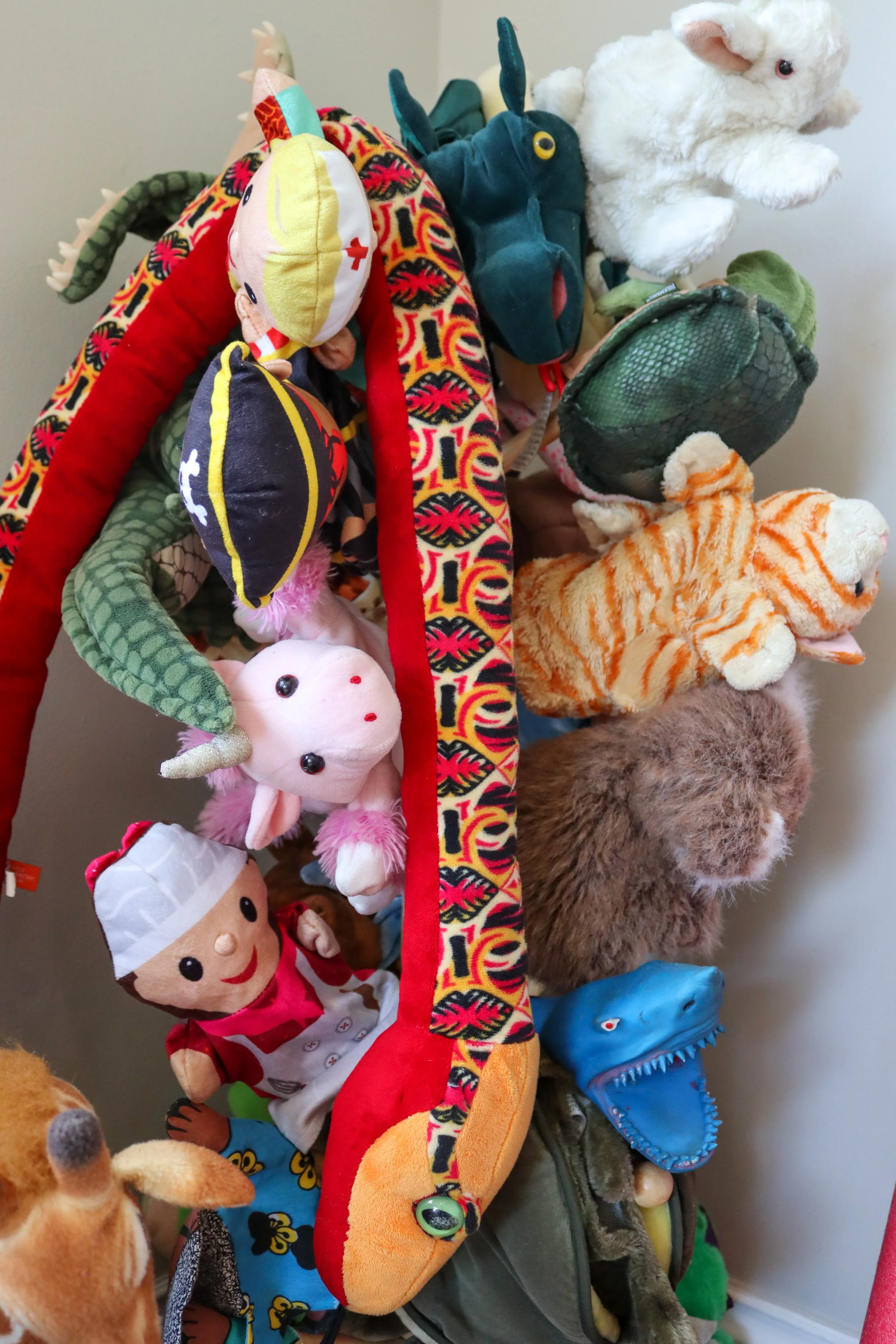
Therapy for Kids ages 5-12
My work with young kids is imaginative, playful, and deeply engaging. Drama therapy is my specialty. Through storytelling, role-play, dress-up, and creative play, kids explore big feelings in ways that feel safe and fun. We might try on different emotions like costumes, act out stories together, or turn a kid’s biggest fear into a playful scene where they become the hero.
Rather than talking about feelings, kids get to play them, move them, transform them. This builds bravery, problem-solving, and emotional expression right in their bodies and imaginations, and it builds confidence and resilience along the way.
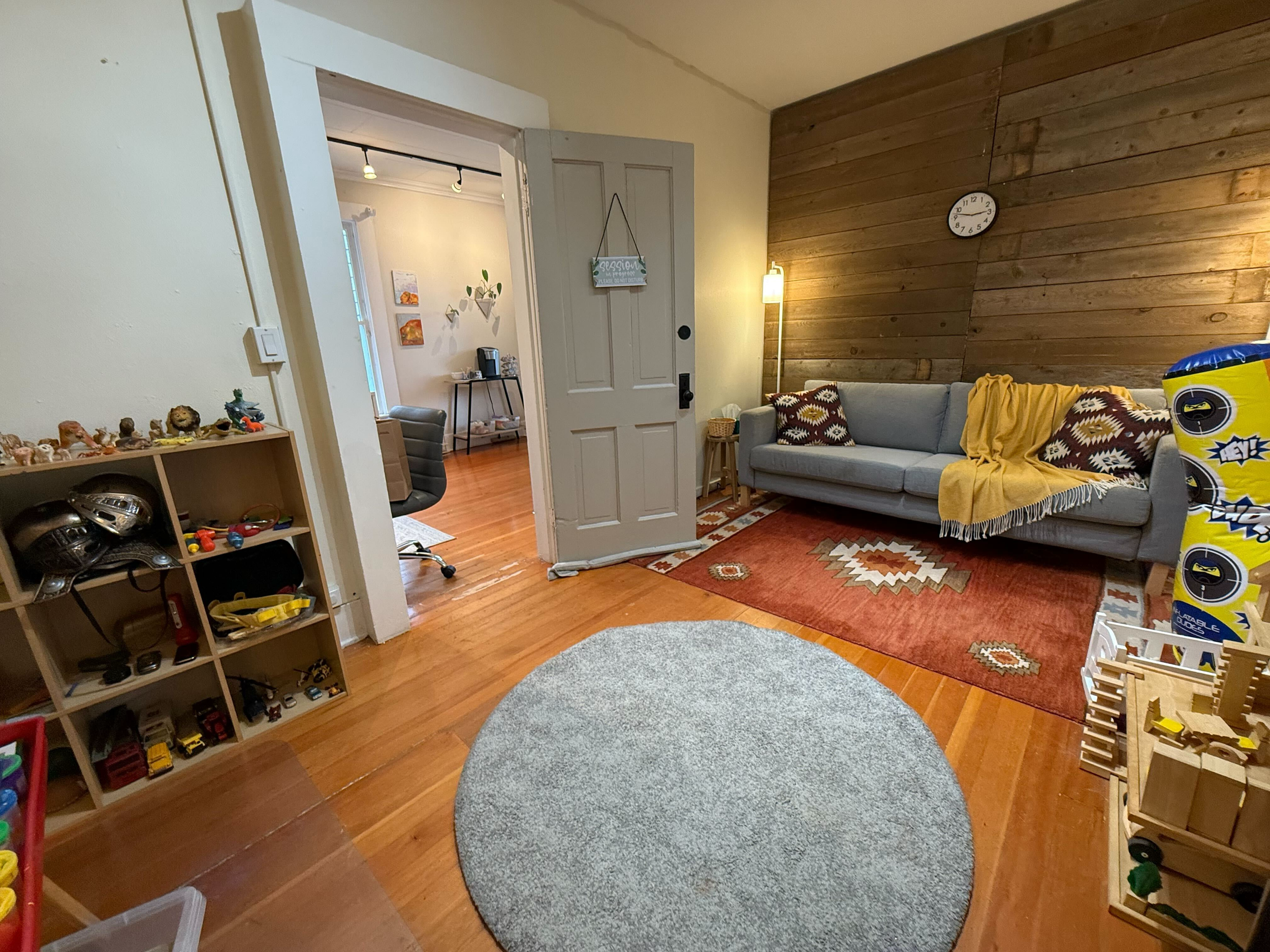
Mick believes therapy should feel like a place where you do not have to perform, explain yourself endlessly, or earn care. You are allowed to arrive exactly as you are..
Working with Mick, you can expect therapy that is:
• Affirming of your identity and lived experience
• Attuned to power, consent, and emotional safety
• Creative, flexible, and responsive to your needs
• Grounded in clinical skill while remaining human and relational
How does Mick support teens in therapy?
My approach is trauma-aware, fat-affirming, and HAES®-informed, with a strong emphasis on safety, consent, and collaboration. Therapy with me isn’t about forcing change. It’s about creating space to understand what your system has been doing to survive, and what it might need next.
I draw from drama therapy and expressive arts to help you externalize experiences, explore identity safely, and access emotions that feel stuck or hard to name. This can matter a lot if you feel disconnected from your body, or if you’ve learned to intellectualize your emotions to cope.
I also have extensive experience facilitating groups, and I understand how relational dynamics, shame, and belonging shape mental health.
How does Mick support kids in therapy?
I use play therapy and drama therapy with kids. Play therapy follows a kid’s lead through toys and free play, a natural way for feelings and experiences to come out. Drama therapy adds guided imagination: role-play, storytelling, movement, character work. Kids might dress up as different emotions, act out worries in pretend worlds, or rewrite scary stories so they feel empowered and in control.
Play therapy lets feelings emerge. Drama therapy invites kids to step into the story and change it.
None of this happens in isolation. I build a relationship with parents just as intentionally as I build one with your kid, because nervous systems regulate in relationship, not alone. When we’re working as a team, the whole family benefits, not just the kid in the room.
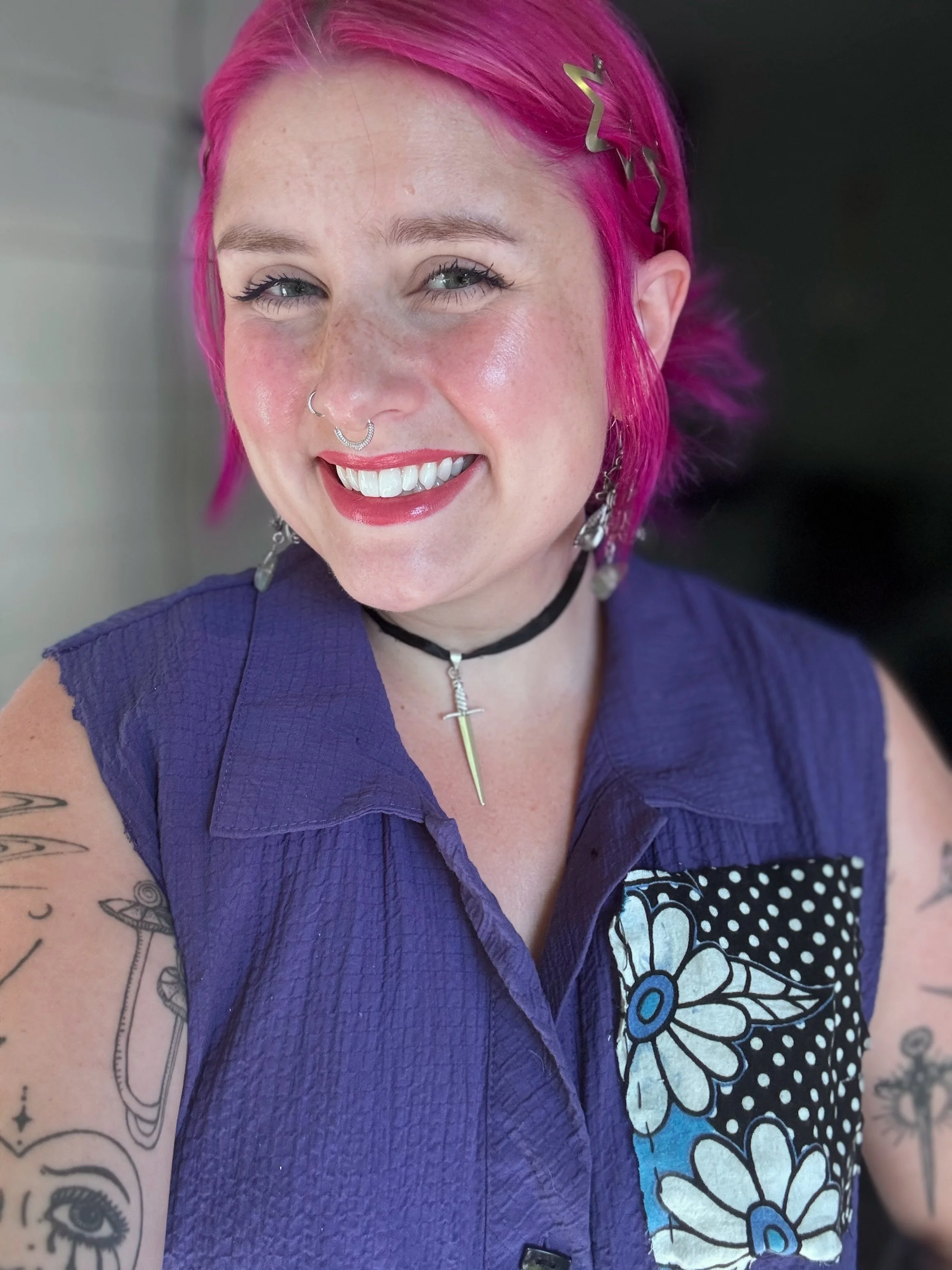
Mick is an unapologetically queer, neurospicy therapist who believes all bodies are good bodies, no exceptions. This means Mick uses words like “fat” as a neutral descriptor of bodies, not an insult, and features books and toys with kids in different bodies and experiences. Mick is also proudly in a fat body.
They model embodiment without shrinking themselves, physically or energetically, and let kids watch what that actually looks like in real time. Neurospicy, in Mick’s case, means AUDHD, with a form of dyslexia called dyscalculia. Numbers are not Mick’s friend.
Authenticity is the heartbeat of Mick’s work, which is why they choose to be upfront about their identities and how their brain works. Mick is not a blank slate therapist, or a buttoned up, blouse and slacks, big therapy jargon speaking sort of person. Mick is honest about who they are so that every kid has permission to do the same. Mick’s brain builds something new for every kid they meet.
Because of their neurodivergence, sessions may involve rolling around on the floor in kid laughter, saying yes to your kid’s wildest idea while earnestly matching their enthusiasm, and modeling what it is to be a full human being who takes up space in their body. All of this happens with full choice and consent on your kid’s part, the invitation is always there. This brain, working exactly how it works, makes this work possible.
Get to Know Mick.

Mick is trained in drama therapy and expressive arts, and holds a master’s degree in Mental Health Counseling and Drama Therapy from Lesley University. Their work is grounded in radical, client-led acts of resistance, using connection and embodiment as the tools.
Mick is not a great fit for people who need a detail oriented, quiet, reserved therapist who sits back and observes rather than jumping in and joining the play.
Numbers, scheduling, small details, these aren’t strengths, and once in a while something will slip. When it does, Mick owns it and fixes it fast. Occasionally, Mick’s neurodivergent brain needs a break, or goes nonverbal, and a session gets cancelled as a result. This doesn’t happen often, and when it does, Mick names it plainly, as an intentional way of practicing exactly what they preach.
Specialized Parent Coaching
Mick offers specialized, short-term parent coaching designed to help you respond with more confidence, more intention, and more trust in both yourself and your child. Drawing experience in eating disorder treatment, Health At Every Size®, fat-affirming care, drama therapy, and somatic practice, Mick helps parents move beyond simply knowing what to do and toward feeling grounded enough to actually do it.
All coaching sessions are virtual, making it easy to connect from wherever you are.
Raising Embodied Kids
Helping your child grow up without inheriting the food and body rules so many of us did.
What if your kid never had to unlearn a single food rule?
Most of us are raising kids while still untangling our own mess around food and bodies. This is where you stop passing that down. Six sessions to audit your own food rules and body talk, swap out the scripts you didn’t choose for language that actually protects your kid, and build a house where food and bodies resist the cultural expectation to be the smallest version of yourself.
You’ll learn how to talk openly about food without attaching moral value to it, normalize health without assigning it any particular look, and unpack systemic injustice as a family, learning to identify how bodies get policed and how to resist it.
Virtual · 6 sessions · 50 minutes each
$510 ($85/session)
Advocating for Your Kid in a Larger Body
The world will try to shrink your kid. You don’t have to let it.
You know there’s nothing wrong with your child’s larger body. But you can also see the stigma and bias the world attaches to it anyway, at the doctor, at school, at the pool. This coaching arms you to advocate hard and respond when your kid asks “am I fat?”
You’ll know how to respond in a body neutral and curious way that signals your body is not a problem, instead of freezing, deflecting, or panicking. You’ll learn how to use language, behavior, and somatic awareness to dismantle internalized anti-fat bias and weight stigma, and raise a kid with the tools to do the same. You’ll walk away with real scripts, what to say to the doctor, what to say to a teacher, and how to talk to other parents about your kid’s body size without othering them.
Virtual · 6 sessions · 50 minutes each
$510 ($85/session)
Co-Regulation Coaching
Your kid’s nervous system is borrowing yours right now.
You’ve read the theory. You know what dysregulation looks like. This is where you actually practice being the calm, in your body, not just in your head, so you have something steady to hand your kid when they fall apart. No equipment, no perfect conditions, just tools you can use anywhere.
Mid-tantrum, instead of “calm down” landing like gasoline, you’ll have a felt, practiced way to drop your own shoulders and slow your own breath first, so your kid’s body has something steady to sync to.
Virtual · 6 sessions · 50 minutes each
$510 ($85/session)
Mick’s Resource Corner

Check out my resources for parents, teens, and professionals
Is it Picky Eating or ARFID?
ARFID stands for Avoidant/Restrictive Food Intake Disorder.
It is an eating disorder where a child does not eat enough food or avoids many foods, not because of body image or weight concerns, but because eating feels overwhelming, scary, or uninteresting to them.
Children with ARFID may:
Eat only a very small number of foods
Avoid whole food groups
Become very upset, anxious, or fearful around food
Not gain weight or grow as expected
ARFID is different from normal picky eating. Picky eating is common and usually improves over time. ARFID affects a child’s health, growth, or daily life.
When do ARFID symptoms appear?
ARFID often starts in early childhood, but it can appear at any age.
Many babies and young children are picky eaters, and that is normal. Around age 3, taste buds change and picky eating often increases.
You may want to talk to your child’s doctor if your child:
Eats only a few foods for a long time
Refuses new foods completely
Becomes very anxious or distressed around eating
Is not growing or gaining weight well
Important note:
If a child avoids food because they are worried about weight, body shape, or appearance, this is likely not ARFID.
How common is ARFID?
Experts estimate that 5–22% of children and teens may have ARFID.
ARFID was officially recognized in 2013, so awareness is still growing.
The 3 main types of ARFID
Most children with ARFID fit into one or more of these types:
1. Sensory sensitivity
Avoids foods because of taste, texture, smell, temperature, or appearance.
2. Fear of negative reactions
Avoids foods because of fear of choking, vomiting, allergies, or stomach pain.
3. Lack of interest in eating
Rarely feels hungry, forgets to eat, or finds eating boring or annoying.
ARFID and other conditions
ARFID often occurs alongside:
Autism
Anxiety or OCD
ADHD
Not every child with these conditions has ARFID.
What does ARFID treatment look like?
Treatment is supportive and gentle.
It focuses on:
Making sure the child gets enough nutrition
Supporting growth and health
Reducing fear and stress around food
Children are not forced to eat new foods. Progress happens slowly.
Is my child’s eating normal?
Children with ARFID may never eat a wide variety of foods — and that’s okay.
Frozen foods, fast foods, and prepackaged foods can be helpful if they allow a child to eat enough and stay healthy.
Parent Checklist: When to Ask for Help
You may want to talk to your child’s doctor if several of these are true:
☐ My child eats fewer than 10–15 foods
☐ My child avoids entire food groups
☐ My child becomes very upset, anxious, or fearful around meals
☐ My child refuses new foods for months or years
☐ My child often skips meals or forgets to eat
☐ My child struggles to eat at school or social events
☐ My child is not gaining weight or growing as expected
☐ Mealtimes feel stressful for my child or our family
Trust your instincts. If eating feels like a constant struggle and affects your child’s health or daily life, it is okay to ask for support.
Neurodivergent & Neuroaffirming Resources
Purpose:
A guide for teens, parents, and professionals to explore neurodiversity through books, communities, podcasts, and organizations that are affirming, inclusive, and accessible.
Neuroaffirming & Neurodiversity Books
Unmasking Autism: Discovering the New Faces of Neurodiversity — Devon Price
Neuroqueer Heresies — Dr. Nick Walker
Divergent Mind: Thriving in a World That Wasn’t Designed for You — Jenara Nerenberg
The Awesome Autistic Go-To Guide — Yenn Purkis & Tanya Masterman
Loud Hands: Autistic People, Speaking — Julia Bascom
I Will Die on This Hill — Dina Gilio-Whitaker
Queerly Autistic — Edited collection
The Autistic Trans Guide to Life
Supporting Transgender Autistic Youth and Adults — Guide for families and professionals
The Neurodivergent Friendly Workbook of DBT Skills
The Autism Industrial Complex — Critiques systems and advocacy
Me and My PDA: A Guide to Pathological Demand Avoidance — Gloria Durà-Vilà & Tamar Levi
Laziness Does Not Exist — Devon Price
A Thousand Ways to Pay Attention: Memoir of Coming Home to My Neurodivergent Mind
Books by Morénike Giwa Onaiwu — Neurodiversity, disability justice, and advocacy
Specialized Resource Lists
PDA-focused: See PDA Resources by Properties of Light
Neurodiversity, trauma, and disability justice: Curated recommendations by Properties of Light
Neurodivergent-Affirming Online Spaces
Facebook / Groups
Neuroclastic
Neurowild
Autistic Not Weird
Reframing Autism
Rachel Dorsey: Autistic SLP, LLC
The Deaf Autistic OT
Kristy Forbes — Autism & ND Support (PDA focus)
Trauma Geek
Black & Autistic
Neurodivergent Rebel
Not an Autism Mom
Danny With Words
Greg Santucci, Occupational Therapist
Aucademy
Autism Level Up
AUsome Training
I CAN Network
Autplay Therapy
Ask Autistic Adults: A Resource for Parents of Autistics
Autism Inclusivity
Autistic Black Girl
Neurodivergent Lou
Therapist Neurodiversity Collective
Autisticelfcare
Autisticselfadvocacy
Websites
Embrace Autism — Community and self-assessment tools (RAADS-R)
Neuroqueer.com — Books, essays, videos by Dr. Nick Walker
Therapist Neurodiversity Collective — ND-affirming professional network
Neurodiversity Library — Literature and resources on neurodivergence
Better Understanding Terms — Dr. Nick Walker, article clarifying ND terminology
Actually Autistic Blogs List — Curated blogs by autistic writers
Neurodivergent Insights — Blogs, infographics, and training resources by Dr. Megan Neff
Resources and More — Dr. Devon Price
All Brains Belong VT — Neuroinclusive healthcare, social connection programs, chronic health guides
Neurodivergent Relationship Dynamics and Resources — Dr. Christine Henry
Autistic-Led Organizations
Neuroclastic
Autistic Women and Nonbinary Network
I CAN Network
Autistic Self-Advocacy Network (ASAN)
Reframing Autism
Jewish Autism Network
Neuroaffirming Podcasts
Divergent Conversations — Dr. Megan Anna Neff & Patrick Casale; neurodivergent-centered topics (new episodes each Friday)
The Autistic Culture Podcast — Matt Lowry & Dr. Angela Lauria; explores autistic contributions to society and culture
Aucademy: Especially Interesting — Neurodivergent individuals discussing their passions and interests
ADHD Resources & Podcasts
Purpose:
Support adults, teens, and families in understanding ADHD, building executive function skills, and navigating daily life.
For Adults with ADHD
ADDitude Experts — Leading experts answer real questions about symptoms, work, and family life
Hacking Your ADHD — Hosted by someone with ADHD; practical tools, research, and workplace strategies
Adulting with ADHD — Navigating adult life with interviews, strategies, and personal experiences
I Have ADHD — Coaching and support for executive function, self-discovery, and managing overwhelm
For Parents & Families
CHADD’s All Things ADHD — Interventions and tips for parents, teens, and educators
ADHD Essentials — Strategies for homework, screen time, and discussing mental health with kids
The ADHD Parenting Podcast — Practical advice from SLPs and LCSWs to support children with ADHD
For Specific Needs
ADHD for Smart Ass Women — Strengths-based reframing and self-discovery for women
Late Bloomers — Reclaiming life after an ADHD diagnosis, with a focus on women
For Teens (Directly Relatable)
ADHD reWired — Hosted by a clinical social worker with ADHD; personal stories and strategies
Hacking Your ADHD — Tips and tricks for thriving with ADHD
This Is So Awkward — Episodes like “ADHD + Teen Relationships” covering social and romantic challenges
ADHD Kids Can Thrive Podcast — Emotional regulation, identity, and challenges like “failure to launch”
For Parents & Teens (Expert Advice)
CHADD (Children and Adults with ADHD) — “All Things ADHD” for parents, teens, and educators
ADDitude Magazine Podcasts — Teen-specific topics: motivation, executive function, and parent-teen dynamics
ADHD Experts Podcast — Practical guidance for homework, emotions, and teen behavior